




A Harmony of Beautiful Nature and Japanese Art –
A New Place to Transmit Japanese Culture
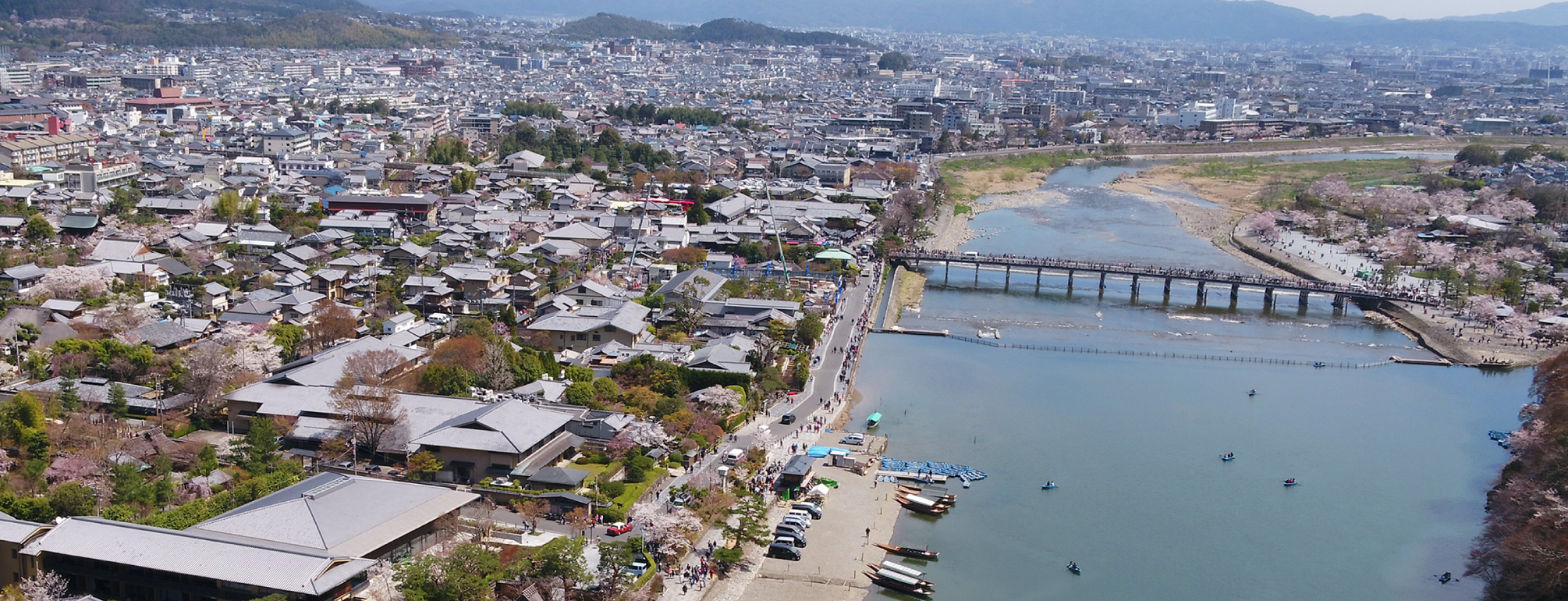
Since ancient times, the Saga-Arashiyama area, home to the Fukuda Art Museum, has been loved by nobles and cultured people, and served as a source of inspiration for outstanding art. Today, the area has become one of Japan’s leading tourist destinations, attracting domestic sightseers as well as visitors from all over the world. By enabling viewers to enjoy the beautiful natural landscape along with works of Japanese art, it is our hope that Arashiyama will become one of the world’s leading sites for culture. For your convenience, we kindly invite you to purchase online tickets prior to your visit.
The Fukuda Art Museum Opens
in the Saga-Arashiyama
District of Kyoto in October 2019

Museum Café & Shop
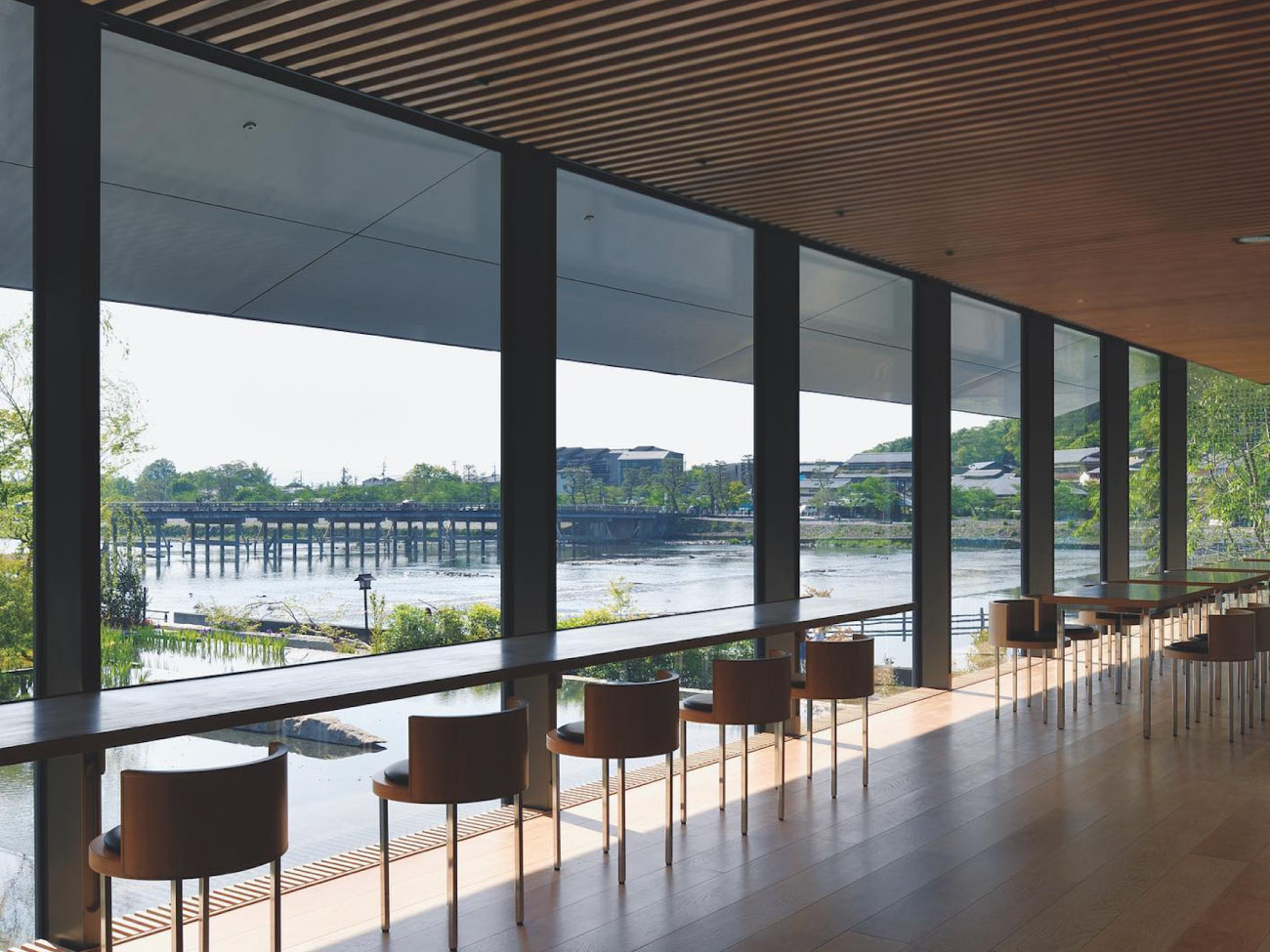
A cafe offering the finest view of Togetsukyo“Bread, Espresso & Fukuda Art Museum”
A sister location of the popular Omotesando bakery cafe,
“Bread, Espresso &”.
Exclusively for museum visitors, our cafe invites you to relax and enjoy drinks, light meals, and sweets while lingering in the afterglow of the art.
Museum Shop:Exhibition Catalogues & Original Goods
Our museum shop offers exhibition catalogues and original merchandise inspired by our collection—items you will want to use every day or share as special gifts. We also feature unique collaborative products created with Kyoto-based artists, emerging creators, and local businesses, alongside traditional crafts from the region.

About the Building’s Design
Japanese Architecture Suited Both to Arashiyama and the Future
Based on the essential qualities of Kyoto’s traditional machiya townhouses, the museum building aims for a new kind of Japanese architecture that will serve as a standard for the next 100 years.
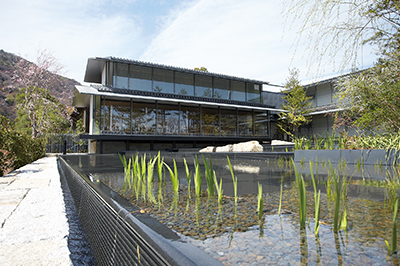
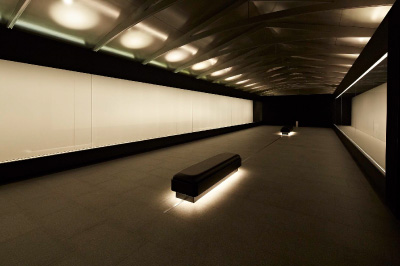
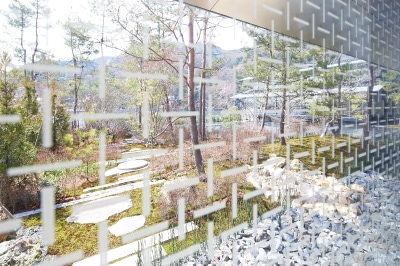
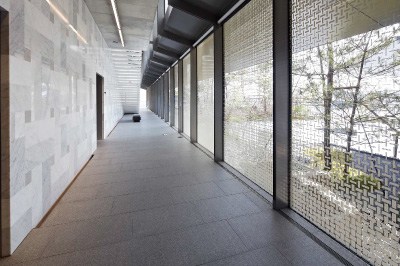
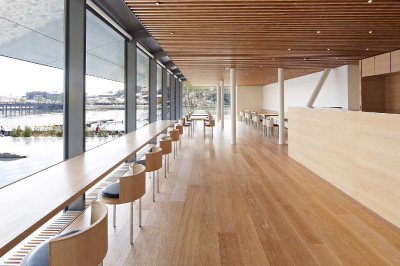
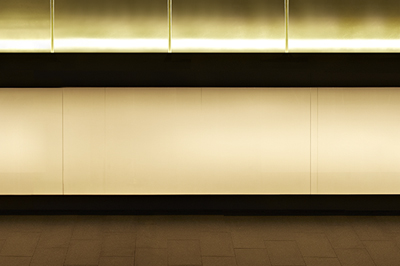

The refined Japanese-modern exterior perfectly blends into the surrounding natural landscape, and a large basin in the garden reflects Arashiyama, functioning like a water mirror connected to the Oigawa River, which flows right there in front of you.
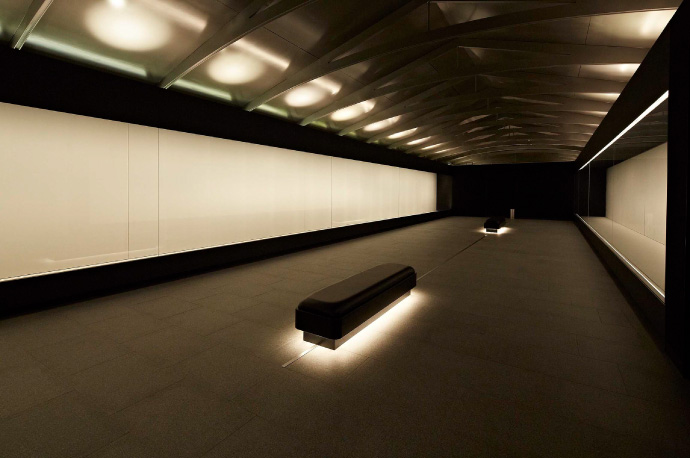
In order to rigorously protect the museum collection, the galleries were designed like traditional Japanese kura (storehouses).
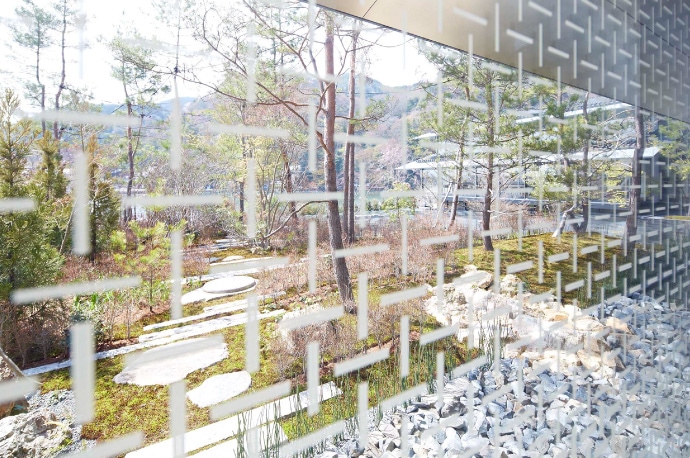
A traditional wickerwork pattern is printed on the glass exterior wall. The lines in the design grow thicker further up the wall, providing a fine view of the garden and scenery.
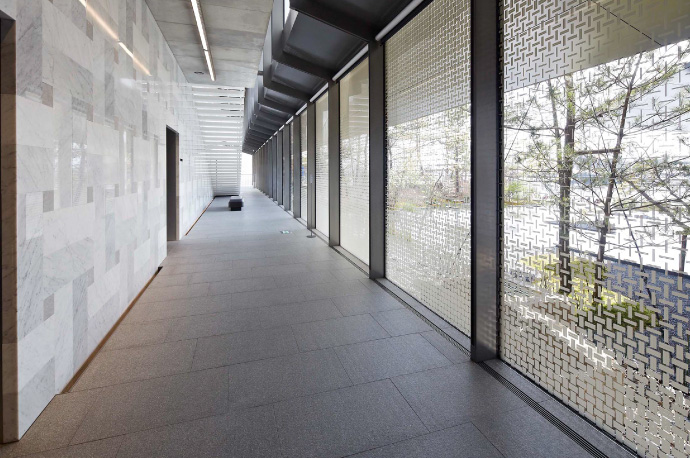
The corridor, which connects the entrance to the galleries, affords a commanding view of the garden, replete with seasonal flowers in bloom. While tranquil, the space recalls the engawa (verandah) in a traditional machiya townhouse by creating a link to the outside.
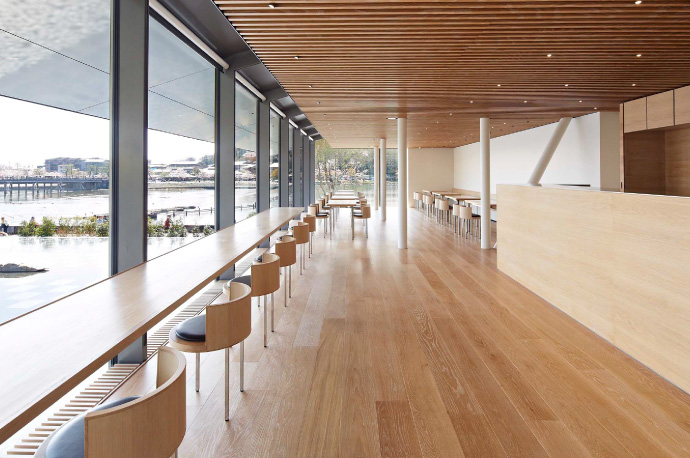
The museum also contains a café, which was designed to provide the most beautiful view of the Togetsukyo Bridge, a local landmark.
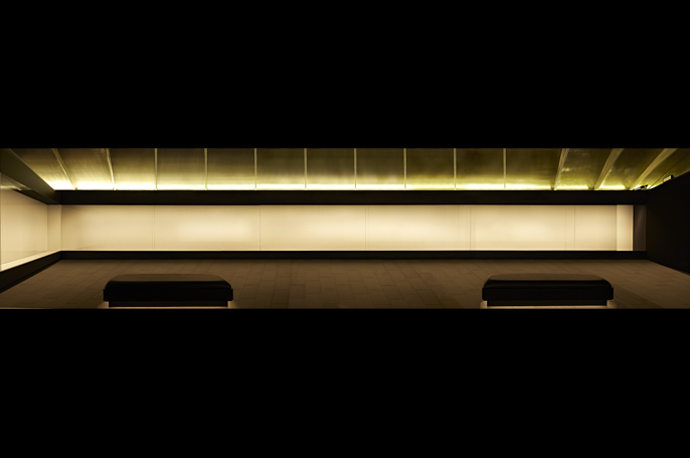
The glass cases in the galleries were specially made by Glasbau Hahn, a German company internationally renown for its highly advanced technology. With a high transmission rate of 92 percent, the large four-meter-wide cases are unlike anything else in the world.